

In the realm of construction, mining, and various stone - related industries, the choice between a rock splitter and a jackhammer can significantly impact the efficiency, cost - effectiveness, and safety of a project. As a rock splitter supplier, I am well - versed in the features and capabilities of both tools, and I'd like to provide an in - depth comparison to help you make an informed decision.
Working Principles
A jackhammer operates on a simple yet powerful principle. It uses a piston - driven mechanism to deliver rapid, high - impact blows to the rock surface. The force generated by the piston striking the chisel bit breaks the rock into smaller pieces. This percussive action is similar to a human hammering a nail but at a much higher frequency and with greater force. For instance, in small - scale demolition projects where a quick removal of concrete or small rocks is required, a jackhammer can be quite effective.
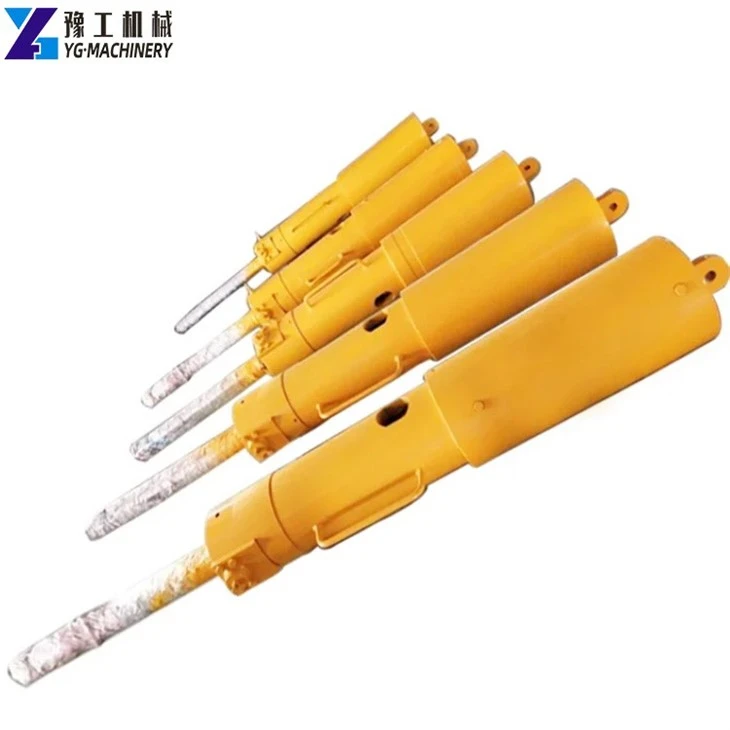
On the other hand, a rock splitter, such as the Hydraulic Splitter for Rock, works on the principle of hydraulic pressure. It consists of a hydraulic pump that generates high - pressure oil, which is then transferred to the splitter wedges. The wedges are inserted into pre - drilled holes in the rock. As the hydraulic pressure builds up, the wedges expand, creating a splitting force that fractures the rock along its natural fault lines or weaknesses. This method is more precise compared to the jackhammer's brute - force approach.
Efficiency and Productivity
When it comes to efficiency, the two tools have different performance characteristics. A jackhammer is relatively fast at breaking small, loose rocks or thin layers of concrete. It can start working immediately without the need for pre - drilling, which makes it suitable for quick, on - the - spot tasks. However, its effectiveness decreases when dealing with large, solid rocks. The repeated impact can cause the tool to bounce off the surface, and it may take a long time to break through a thick, hard rock mass.
A rock splitter, especially the Integrated Drill and Splitting Machine, offers higher productivity in large - scale rock - breaking projects. Once the pre - drilling is done, the splitting process is relatively fast and can handle large rocks with ease. The ability to split rocks along their natural fault lines means that less energy is wasted compared to the random breaking action of a jackhammer. In a mining operation, for example, a rock splitter can split large boulders into manageable pieces more quickly, reducing the overall time and labor required for the project.
Precision and Control
Precision is a crucial factor in many construction and mining projects. A jackhammer lacks precision as it delivers random impacts. It can cause collateral damage to the surrounding area, such as cracking adjacent structures or causing excessive dust. This lack of control makes it less suitable for projects where the integrity of the surrounding environment needs to be maintained.
In contrast, a rock splitter provides excellent precision. The operator can choose the exact location to insert the wedges and control the direction of the split. This is particularly important in projects like tunneling, where the rock needs to be removed without disturbing the tunnel walls. The Rock Splitter for Excavator can be easily maneuvered to split rocks in hard - to - reach places with high accuracy.
Noise and Vibration
Noise and vibration are significant concerns in any construction or mining site. A jackhammer is notoriously noisy, producing high - decibel sounds that can cause hearing damage to the operator and nearby workers. The continuous vibration can also lead to hand - arm vibration syndrome (HAVS) for the operator, a painful and potentially disabling condition.
A rock splitter, however, operates relatively quietly. The hydraulic system produces less noise compared to the percussive action of a jackhammer. The vibration is also minimal, reducing the risk of HAVS and making it a more comfortable and safer tool to use. This makes the rock splitter a better choice for projects in urban areas or near sensitive locations where noise and vibration need to be minimized.
Cost - Effectiveness
The cost - effectiveness of a tool depends on various factors, including the initial purchase price, operating costs, and maintenance requirements. A jackhammer is generally cheaper to purchase initially. It has a simple design and is widely available in the market. However, its operating costs can be high due to the frequent replacement of chisel bits and the high energy consumption required to generate the percussive force.
A rock splitter has a higher initial purchase price, but its long - term cost - effectiveness is often better. The hydraulic components are durable and require less frequent replacement compared to the chisel bits of a jackhammer. The lower energy consumption and higher productivity also contribute to cost savings over time. In addition, the reduced need for repairs and maintenance due to the lower vibration and stress on the components further enhances its cost - effectiveness.

Safety
Safety is of utmost importance in any work environment. A jackhammer poses several safety risks. The high - speed rotating parts and the powerful percussive action can cause serious injuries if the operator is not properly trained or if safety precautions are not followed. The flying rock fragments and dust generated by the jackhammer can also cause eye injuries and respiratory problems.
A rock splitter is a safer option. The splitting process is more controlled, reducing the risk of flying debris. The lower noise and vibration levels also contribute to a safer working environment. Additionally, the pre - drilling required for the rock splitter allows for a more systematic approach, reducing the chances of unexpected rock movements or collapses.
Conclusion
In conclusion, both the rock splitter and the jackhammer have their own advantages and disadvantages. A jackhammer is suitable for small - scale, quick - fix projects where precision and noise are not major concerns. However, for large - scale rock - breaking projects, especially those that require high precision, low noise, and better cost - effectiveness, a rock splitter is the superior choice.
As a rock splitter supplier, I understand the specific needs of different projects and can provide you with the most suitable rock - splitting solutions. Whether you are involved in construction, mining, or any other industry that requires rock - breaking, our range of products, including the Hydraulic Splitter for Rock, Integrated Drill and Splitting Machine, and Rock Splitter for Excavator, can meet your requirements.
If you are interested in learning more about our rock splitters or would like to discuss a potential purchase, please feel free to reach out. Our team of experts is ready to assist you in making the right choice for your project.
References
- Construction Equipment Handbook, various editions
- Mining Engineering Journal, articles on rock - breaking technologies
- Safety Guidelines for Construction and Mining Tools, industry - specific publications