

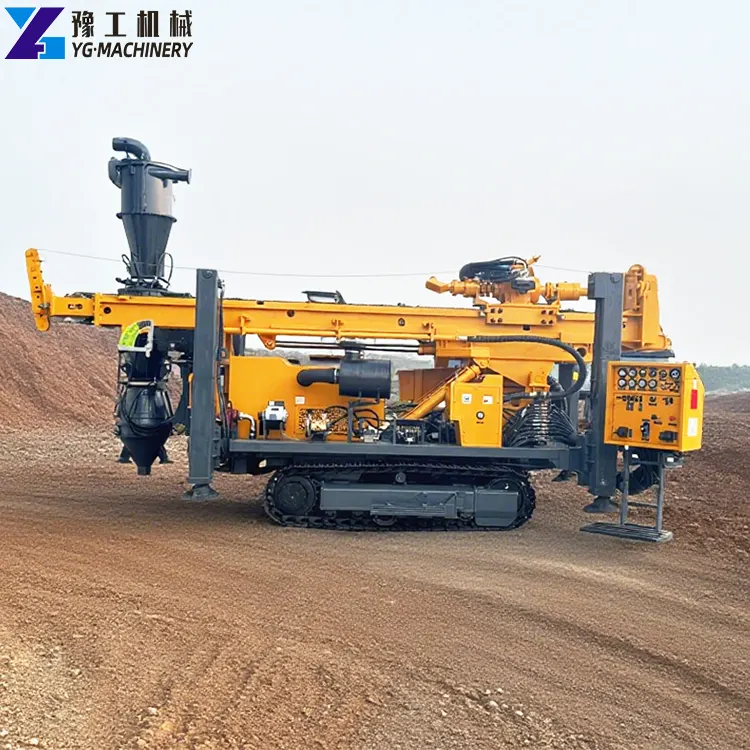
What Is Reverse Circulation Drilling? - The Technical Principles of Reverse Circulation Drilling
Reverse circulation drilling is a geotechnical drilling technology where the flushing fluid flows down through the annulus between the drill pipe and the borehole wall to the bottom, then returns through the inner tube of the drill pipe to form a reverse circulation. The circulating medium can be water, mud, or air. Compared to traditional forward circulation drilling (where the flushing fluid is introduced into the drill pipe and returned through the annulus), reverse circulation drilling has a higher fluid (or air) flow velocity, a stronger ability to carry rock cuttings, and allows broken rock from the bottom of the borehole to be discharged promptly and quickly returned to the surface.
This ingenious "reverse circulation" design brings several significant advantages: First, the flushing medium rises at a high speed in the central hole of the drill pipe, resulting in a very strong ability to remove drill cuttings. The drill cuttings have a large particle size, less repeated breakage, and can significantly improve drilling efficiency, especially in large-diameter drilling. Second, sampling can be performed in real time without stopping drilling, and its advantages of high construction efficiency and low cost have been verified in exploration areas such as the Karatag region of Xinjiang. Third, when air is used as the circulating medium, water-saving drilling can be achieved, which is particularly advantageous in arid and water-scarce areas.
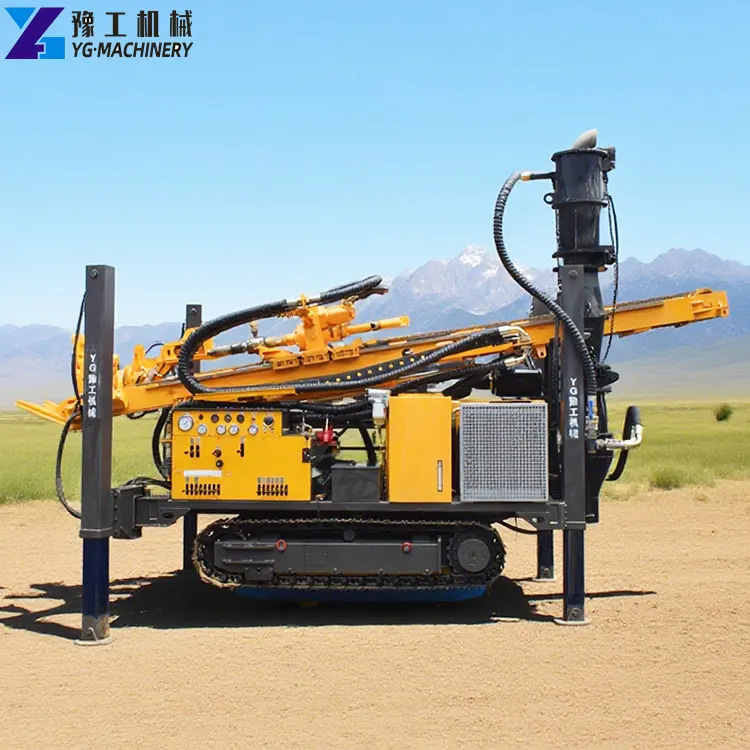
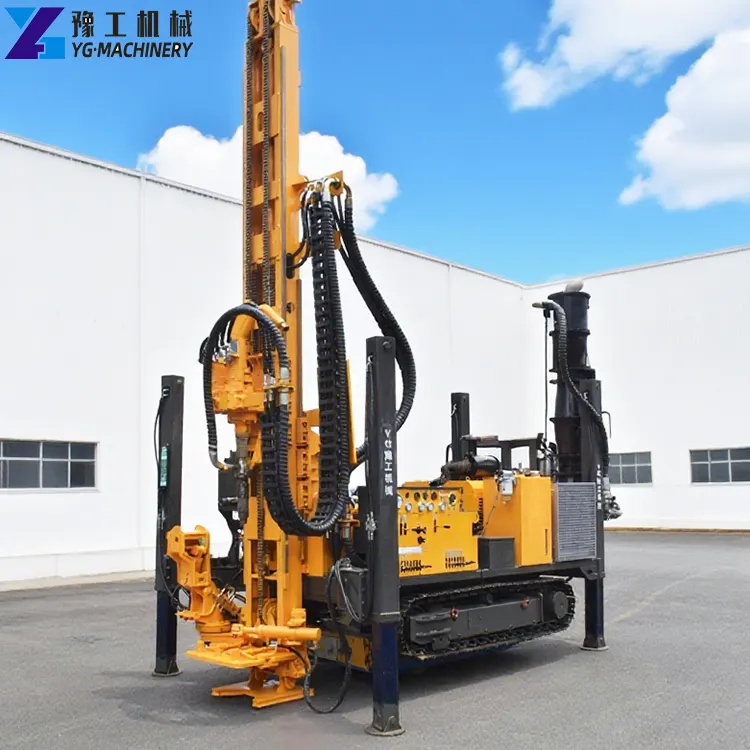
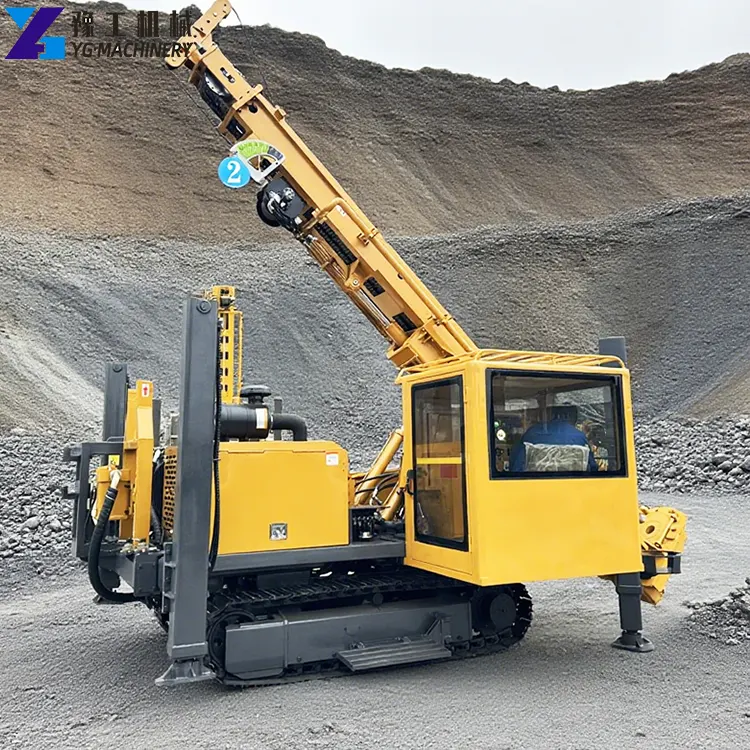
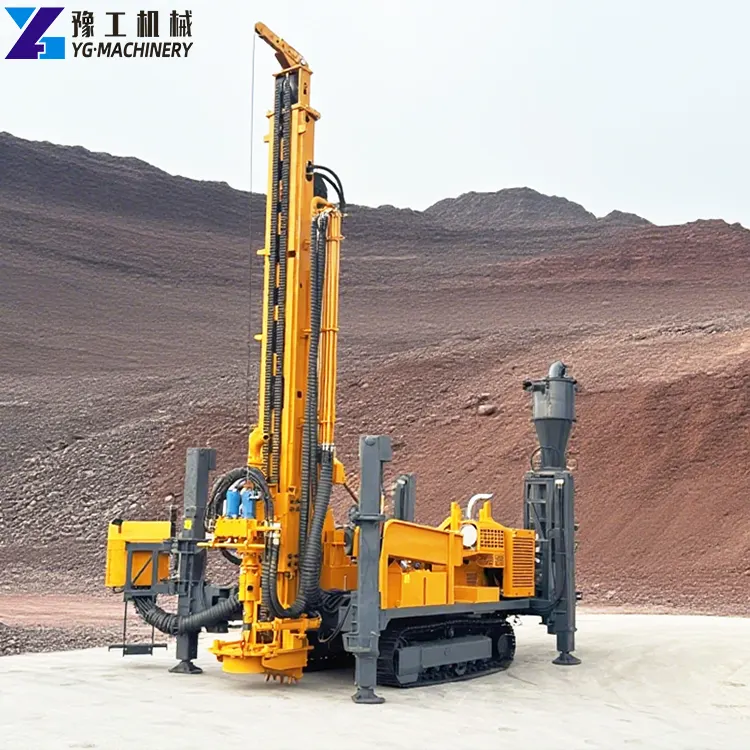
YG Reverse Circulation Drill Rig Technical Parameter
|
Model |
YG150RC |
|
|
Drill rig weight(crawler-mounted) |
kg |
9000 |
|
Engine Power |
kW |
125 |
|
Length × Width × Height (normal) |
mm |
6750x2200x2950 |
|
Ambient Temperature Range |
°C |
-10~38 |
|
Drill Ability |
||
|
Nominal Drill Depth |
m |
150 |
|
End-hole Diameter |
mm |
110-250 |
|
Drill angle |
° |
-10-90 |
|
Horizontal hole height |
m |
1.85-2.8 |
|
Drill head output |
||
|
Max Output Torque |
N.m |
8000 |
|
Output Rotation Speed(continuity) |
rpm |
30 / 60, 54/108rpm |
|
Output Rotation Speed(interval) |
rpm |
62 / 124105/210rpm |
|
Feeding |
mm |
3500 |
|
Thrust Force |
kN |
45 |
|
Lifting Capacity |
kN |
65 |
|
Pipe-puller Device Output |
||
|
Output Rotation Speed |
rpm |
40 |
|
Max Output Torque |
N.m |
30000 |
|
Hole-through Diameter |
mm |
370 |
|
Auxiliary Winch |
||
|
Pull Force of the First Layer |
kN |
11 |
|
Rope Diameter |
mm |
14 |
|
Rope Capacity |
m |
60 |
|
Engine(Cummins) |
6BTA5.9-C125 |
|
|
Power |
kW |
125 |
|
Rotary Speed (Max.) |
rpm |
2200 |
|
Track Chassis Base |
||
|
Walk Speed |
Km/h |
1.2 |
|
Unit Pressure |
MPa |
<0.05 |
|
Climb Ability |
° |
Drill rig weight(crawler-mounted) |
Key Advantages of the Reverse Circulation Drill Rig: Why Choose It?
- Extremely Fast Drilling Speed, 50%–300% Efficiency Improvement. The RC drilling rig utilises down-the-hole hammer impact crushing and continuous cuttings removal, achieving an average efficiency 2–5 times that of a full hydraulic core drilling rig. It can reach 8–15 m/hour in hard rock formations and 15–30 m/hour in loose formations, significantly shortening the construction period.
- 100% Pure and Highly Representative Samples. Rock cuttings are directly returned through a sealed inner tube, preventing mixing with the wellbore soil, resulting in high sample purity and clear stratification. Compared to traditional coring, the sampling rate is consistently 95%–100%, providing accurate data for mineral grade assessment.
- Adaptable to Complex Formations, No Borehole Collapse or Drill Bit Jam. Double-walled drill pipe + reverse airflow circulation ensures uninterrupted circulation even when encountering caves, fissures, and quicksand layers. No mud slurry is needed for borehole wall protection, reducing the risk of borehole collapse and stuck drill bits, offering significant advantages in sand and gravel layers, fractured zones, and water-scarce areas.
- Lower overall cost, far exceeding the cost-effectiveness of traditional drilling rigs.
- Lower fuel consumption: 30%+ more fuel-efficient than comparable full hydraulic core drilling rigs.
- Less manpower required: 1-2 operators, high degree of automation.
- Even more consumables: Longer down-the-hole hammer life, less drill pipe wear, and simpler maintenance.
- More drilling footage: Significantly increased drilling depth and coverage within the same budget.
5. Multifunctional and Versatile. Quickly switches between air reverse circulation, mud reverse circulation, and air lift reverse circulation. Suitable for various scenarios, including mineral exploration, water wells, geothermal wells, engineering pile foundations, and blasting holes.
In Which Typical Industries and Scenarios Is the Reverse Circulation Drill Rig Suitable?
Mineral Exploration
General survey and detailed investigation of metallic minerals such as gold, copper, iron, and nickel.
Water Well Drilling
Rapidly locating groundwater sources in arid regions.
Geological Hazard Investigation
Deep exploration of landslides and mined-out areas.
Environmental Monitoring
Deep soil sampling of contaminated sites.
Foundation Engineering
Pre-drilling operations for large-diameter cast-in-place piles.
Geothermal Development
Exploration and utilisation of shallow geothermal energy.
RC Drilling Rig vs. Fully Hydraulic Core Drilling Rig: How to Select the Right Model?
|
Comparison Dimensions |
RC Drilling Rig |
Full Hydraulic Core Drilling Rig |
|
Applicable Scenarios |
Mine grade control, rapid surveying, arid and water-scarce areas |
For detailed mineral exploration, geothermal well construction, and engineering geological surveys |
|
Sampling Type |
Rock cuttings (continuous sample return, real-time stratigraphic information) |
High-quality cores (suitable for detailed geological analysis) |
|
Drilling Efficiency |
Extremely high (daily drilling depth 110 meters+, 3-5 times that of traditional methods) |
Relatively high (affected by the number of wireline coring runs) |
|
Sampling Quality |
No cross-contamination, strong representativeness |
Core integrity 95%–98%+ |
|
Cost |
Low (overall cost reduced by more than 50%) |
Relatively high, but with a higher core value |
|
Applicable Formations |
Fractured strata, loose strata, water-scarce areas |
Suitable for hard rock, complex geological conditions, and deep hole drilling |
Frequently Asked Questions about Reverse Circulation Drill Rigs
Q1: What is the maximum drilling depth of the RC rig?
A1: Our standard model supports 300-500 meters. By increasing the air compressor pressure and optimising the drill pipe configuration, it can reach depths of over 600 meters.
Q2: Can it be used in hard rock formations?
A2: Absolutely. The down-the-hole hammer combined with high-pressure airflow efficiently breaks up hard rocks such as granite and basalt, far exceeding the efficiency of ordinary hydraulic drilling rigs.
Q3: Is maintenance complicated?
A3: Compared to ordinary drilling rigs, RC rigs require more attention to the sealing of the air compressor and double-walled drill pipes. We provide detailed maintenance manuals and video tutorials.
Q4: Can it be used without an air compressor?
A4: No. High-pressure air is the core power source of the RC. It can be equipped with its own air compressor or connected externally; the manufacturer provides integrated solutions.
Q5: Do you offer rental services for reverse circulation drilling equipment?
A5: We primarily operate as a factory-direct seller, but we can recommend partners who have purchased our equipment locally and offer leasing services.
Q6: How long does it take to ship overseas?
A6: We typically ship by sea in 40-foot high cube containers or flat rack containers. Shipping time depends on the destination, usually 20-45 days.
Q7: Is it environmentally friendly? Is it suitable for water-scarce areas?
A7: Very environmentally friendly. No mud, no waste liquid, and controllable dust. Pure air drilling makes it particularly suitable for arid, water-scarce, and environmentally sensitive areas.


