

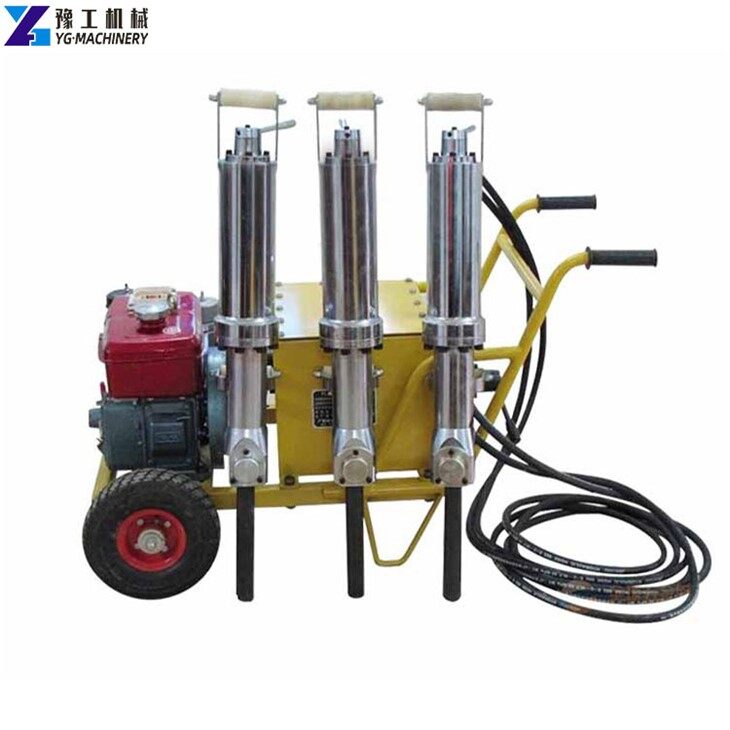
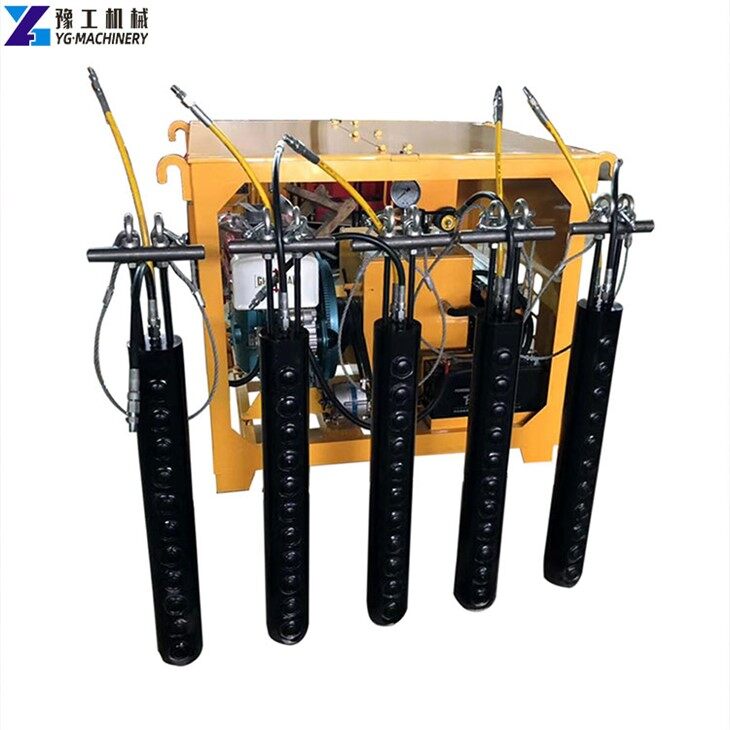
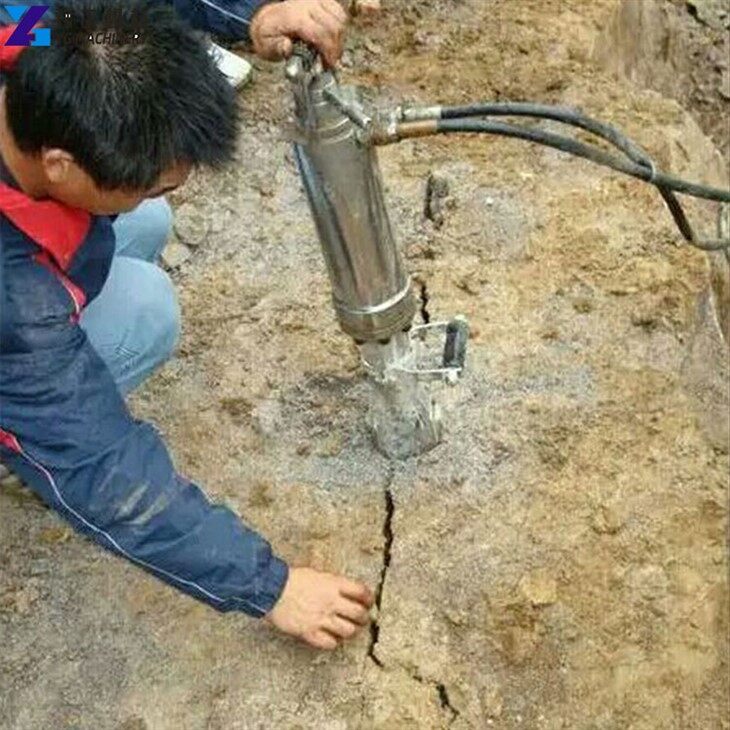
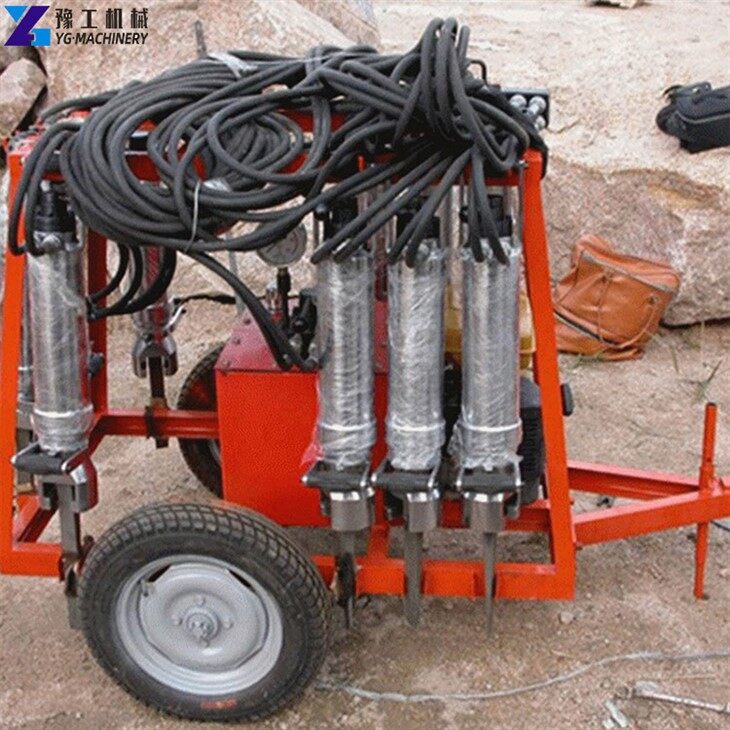
Hydraulic concrete splitter, also known as hydraulic rock splitter or hydraulic stone splitter, is a mechanical device that uses hydraulic power to drive a wedge group to perform static splitting on brittle materials such as concrete and rock. It uses a wedge group to apply a strong expansion force in the pre-drilled hole to split the concrete or rock structure from the inside without vibration, noise, or dust. In engineering fields such as building demolition, mining, and tunnel excavation, the crushing of concrete structures is a crucial link. Traditional methods such as blasting and breaker hammers are often accompanied by environmental pollution and safety hazards such as noise, dust, and vibration. Hydraulic concrete splitter came into being. With its static crushing, high efficiency, safety, and precise controllability, it has become an innovative tool for modern concrete structure demolition. Are you interested too? Contact us now.
Technological Parameters of Hydraulic Concrete Splitter:
|
Model |
YG-250 |
YG-350 |
YG-450 |
|
Wedge Length(mm) |
250mm |
350mm |
450mm |
|
Piston Stroke(mm) |
90/220mm |
90/220mm |
90/220mm |
|
Drilling Depth(mm) |
>500mm |
>700mm |
>900mm |
|
Punching Diameter(mm) |
42mm |
46mm |
46mm |
|
Crack Width(mm) |
10-20mm |
10-20mm |
10-20mm |
|
Cleavage Time(s) |
10-15/s |
10-15/s |
10-15/s |
|
Splitting Force(T) |
500t |
800t |
800t |
|
Weight(kg) |
240kg |
250kg |
260kg |
Working Principle of Hydraulic Concrete Splitter:
- Drilling: First, drill holes of a certain depth and diameter on the concrete or rock structure to be broken according to the predetermined splitting direction and spacing. The depth and diameter of the holes, as well as the hole spacing, need to be reasonably selected according to factors such as the hardness, structure, and crushing size of the material to be broken. Drilling is the basis of splitting operations.
- Insert the splitting gun: Insert the splitting gun (also called the splitting head) of the hydraulic concrete splitter into the pre-drilled hole. The wedge group at the front end of the splitting gun is in a retracted state and can be smoothly inserted into the hole.
- Hydraulic pressurization: Start the hydraulic pump station, the hydraulic system generates high-pressure oil, pushes the hydraulic cylinder inside the splitting gun to move, drives the center wedge to move forward, and pushes the reverse wedges on both sides to expand to both sides. The hydraulic system is the power source and control core of the splitter.
- Static splitting: As the hydraulic pressure continues to increase, the wedge group exerts a huge expansion force on the hole wall. When the expansion force exceeds the tensile strength of the concrete or rock, the material will be split from the inside. Static expansion force is the key to achieving crushing.
- Removing the splitting gun: After the splitting is completed, release the hydraulic pressure, the wedge group automatically resets and shrinks, and the splitting gun is removed to clean the crushed concrete or rock blocks. The hydraulic system is depressurized to complete a splitting cycle.
Advantages of Hydraulic Concrete Splitter:
- Environmental protection advantage: The vibration-free, noise-free, and dust-free crushing method significantly reduces the impact of construction on the surrounding environment, reduces complaints of nuisance, and protects the ecological environment, especially in sensitive areas such as urban central areas, residential areas, hospitals, and schools.
- Safe construction advantage: It avoids the danger of blasting operations, eliminates the risk of accidental splashing of the breaker, improves construction safety, ensures the safety of personnel and equipment, and reduces the possibility of safety accidents. It is especially suitable for demolition operations in narrow spaces, restricted sites, and high-risk environments.
- Economic benefit advantage: High crushing efficiency, short preparation time, fewer operators, and low maintenance costs can significantly reduce construction costs, shorten construction periods, and improve engineering economic benefits. It is especially suitable for large-scale engineering projects and projects with tight construction periods.
- Precise crushing advantage: The splitting direction and crushing size are controllable, which can achieve directional demolition and precise cutting, maximize the retention of non-crushed parts, and reduce excessive crushing and unnecessary losses. It is especially suitable for operations with high precision requirements such as structural transformation, partial demolition, and stone mining.
- Advantages of wide application: It has wide applicability and can crush concrete and rocks of various hardness. Its application areas cover building demolition, mining, tunnel excavation, water conservancy projects, emergency rescue, and other industries, and it has huge market potential.


