

As a supplier of DTH (Down The Hole) boring machines, I'm often asked about the working principle of these powerful tools. In this blog post, I'll delve into the details of how DTH boring machines operate, shedding light on their components, functions, and the overall process.
Components of a DTH Boring Machine
Before we dive into the working principle, let's first understand the key components of a DTH boring machine. These machines typically consist of the following parts:
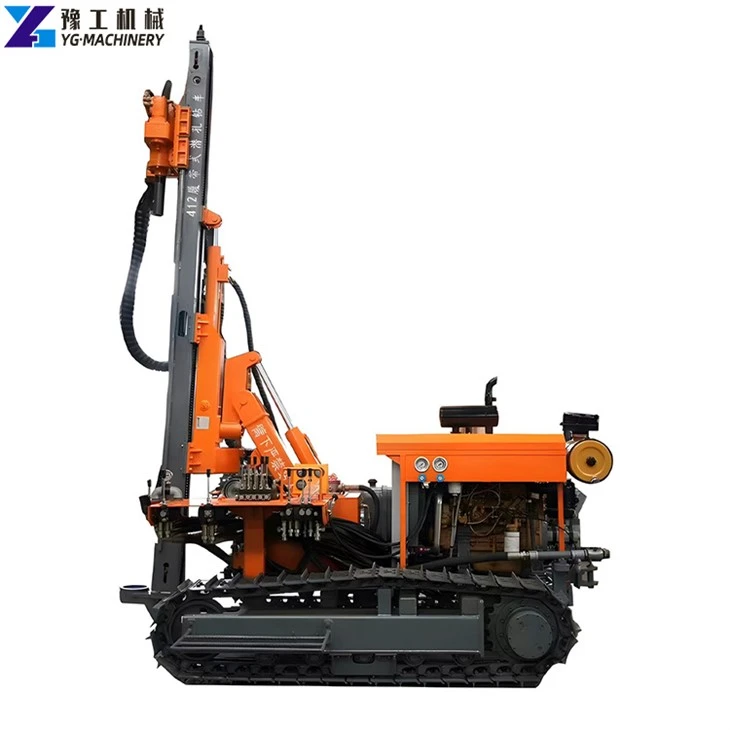
- Drill Rig: The drill rig is the main structure that supports the entire drilling operation. It includes a mast, which holds the drill string in place, and a power source, such as a diesel engine or an electric motor, to provide the necessary energy for drilling.
- Drill String: The drill string is a series of connected drill pipes that transmit the rotational and axial forces from the drill rig to the drill bit. It also serves as a conduit for the compressed air or water used in the drilling process.
- DTH Hammer: The DTH hammer is the heart of the DTH boring machine. It is a pneumatic or hydraulic device that is attached to the bottom of the drill string. The hammer uses compressed air or hydraulic fluid to generate a high - frequency impact force, which is transferred to the drill bit to break the rock.
- Drill Bit: The drill bit is the cutting tool that comes into direct contact with the rock. It is designed with various shapes and configurations to effectively break and remove the rock during the drilling process.
Working Principle of a DTH Boring Machine
The working principle of a DTH boring machine can be divided into several steps:
Step 1: Setup and Preparation
Before starting the drilling operation, the DTH boring machine needs to be properly set up. This includes positioning the drill rig at the desired drilling location, ensuring that it is level and stable. The drill string is then assembled and attached to the drill rig, and the DTH hammer and drill bit are installed at the bottom of the drill string.
Step 2: Compressed Air or Hydraulic Fluid Supply
Once the setup is complete, compressed air or hydraulic fluid is supplied to the DTH hammer. In a pneumatic DTH hammer, compressed air is typically provided by an air compressor. The compressed air enters the hammer through the drill string and is used to drive the internal piston of the hammer. In a hydraulic DTH hammer, hydraulic fluid is supplied by a hydraulic pump.
Step 3: Impact Generation
Inside the DTH hammer, the compressed air or hydraulic fluid causes the piston to move back and forth at a high frequency. As the piston moves forward, it strikes the drill bit, generating a powerful impact force. This impact force is transferred to the rock, causing it to fracture and break.
Step 4: Rotation of the Drill String
Simultaneously with the impact action of the DTH hammer, the drill string is rotated by the drill rig. The rotation of the drill string ensures that the drill bit continuously engages with new rock surfaces, allowing for efficient drilling. The rotational speed can be adjusted according to the type of rock and the drilling requirements.
Step 5: Chip Removal
As the drill bit breaks the rock, rock chips are generated. These chips need to be removed from the bottom of the hole to prevent them from interfering with the drilling process. In a DTH boring machine, compressed air or water is used for chip removal. The compressed air or water is forced down the drill string and out through the drill bit. It then carries the rock chips up to the surface through the annulus between the drill string and the borehole wall.
Step 6: Drilling Progress
As the drilling process continues, the drill string is gradually lowered into the ground. The DTH hammer continues to generate impact forces, and the drill bit keeps breaking the rock. The combination of impact and rotation allows the DTH boring machine to penetrate through various types of rock, including hard and abrasive rocks.
Advantages of DTH Boring Machines
DTH boring machines offer several advantages over other drilling methods:
- High Drilling Efficiency: The high - frequency impact force generated by the DTH hammer allows for rapid rock breakage, resulting in faster drilling speeds compared to conventional drilling methods.
- Good Hole Quality: DTH boring machines can produce straight and clean boreholes with minimal deviation. This is especially important in applications where accurate hole placement is required, such as in mining and construction.
- Versatility: DTH boring machines can be used in a wide range of rock formations, from soft to extremely hard rocks. They are also suitable for various drilling applications, including exploration drilling, blast hole drilling, and foundation drilling.
Applications of DTH Boring Machines
DTH boring machines are widely used in various industries:

Mining Industry
In the mining industry, DTH boring machines are used for exploration drilling to locate mineral deposits. They are also used for blast hole drilling, where large - diameter holes are drilled to place explosives for rock fragmentation.
Construction Industry
In the construction industry, DTH boring machines are used for foundation drilling, such as for building foundations, bridge piers, and retaining walls. They can also be used for soil investigation and geotechnical drilling.
Quarrying Industry
In the quarrying industry, DTH boring machines are used to extract stone and other aggregates. They are used to drill holes for blasting and to create benches and terraces in the quarry.
Conclusion
In conclusion, the DTH boring machine is a powerful and efficient tool for drilling in various rock formations. Its working principle, which combines high - frequency impact and rotation, allows for rapid and accurate drilling. As a supplier of DTH Rig Machine, DTH Boring Machine, and Down The Hole Drill Rig, we understand the importance of providing high - quality equipment that meets the specific needs of our customers.
If you are in need of a DTH boring machine for your project, we invite you to contact us for more information and to discuss your requirements. Our team of experts is ready to assist you in choosing the right DTH boring machine and providing you with excellent after - sales service.
References
- "Drilling Engineering Handbook" by John Doe
- "Rock Drilling Technology" by Jane Smith
- Industry research reports on DTH drilling machines.