

Hey there! As a supplier of hydraulic wire saws, I often get asked about the size of these nifty tools. So, I thought I'd write this blog to break it all down for you.
First off, let's talk about why the size of a hydraulic wire saw matters. The size can impact a whole bunch of things, like how easy it is to transport, where you can use it, and what kind of jobs it's best suited for. Whether you're working on a small DIY project or a large - scale industrial job, getting the right size is crucial.
The Dimensions of Hydraulic Wire Saws
Hydraulic wire saws come in different shapes and sizes, and there isn't a one - size - fits - all solution. The overall size of a hydraulic wire saw is usually determined by its frame, the length of the wire, and the power unit.
Frame Size
The frame is the backbone of the hydraulic wire saw. It holds the wire in place and provides stability during the cutting process. Smaller frames are great for tight spaces. For example, if you're doing some interior demolition work where space is limited, a compact frame hydraulic wire saw can be a real lifesaver. These smaller frames can often be easily maneuvered around obstacles and set up quickly.
On the other hand, larger frames are designed for heavy - duty jobs. They can handle bigger cuts and are more stable when cutting through thick materials. Construction sites that are working on large concrete structures or rock formations often opt for larger - framed hydraulic wire saws. The size of the frame also affects the maximum cutting depth. A larger frame can typically accommodate a longer wire, which means you can cut deeper into the material.
Wire Length
The length of the wire is another important factor when it comes to the size of a hydraulic wire saw. Shorter wires are more suitable for smaller jobs. They're easier to manage and can be used in areas where you don't need to cut very deep. For instance, if you're just cutting through a small concrete slab in your backyard, a shorter wire will do the trick.
Longer wires, however, are used for larger projects. They allow you to cut through thick walls, large columns, or even underwater structures. But keep in mind that longer wires also require more power to operate. You need a powerful hydraulic system to keep the wire moving at the right speed and tension.
Power Unit Size
The power unit is what provides the energy to run the hydraulic wire saw. Smaller power units are lightweight and portable. They're perfect for jobs where you need to move the saw around a lot. You can easily carry them from one location to another on a construction site. These smaller power units are usually sufficient for smaller wire saws with shorter wires.
Larger power units, on the other hand, are more powerful. They can drive longer wires and handle more demanding cutting tasks. But they're also heavier and bulkier. You might need a vehicle or some kind of lifting equipment to transport them. If you're working on a large - scale industrial project, a large power unit is probably what you'll need.
Different Types of Hydraulic Wire Saws and Their Sizes
There are several types of hydraulic wire saws, each with its own typical size range.
Diamond Wire Saw Rope
The Diamond Wire Saw Rope is a popular type of hydraulic wire saw. These saws come in various sizes depending on the application. For light - duty jobs, like cutting through thin pipes or small pieces of stone, you can find diamond wire saw ropes with relatively short lengths and smaller frames. These are often more compact and easier to handle.
For heavy - duty applications, such as cutting through large concrete structures or thick rock, the diamond wire saw ropes are longer and the frames are larger. The power units for these heavy - duty diamond wire saw ropes are also more powerful to ensure smooth and efficient cutting.
HF Wire Saw
The HF Wire Saw is known for its high - frequency operation. These saws are often used in precision cutting tasks. They can come in different sizes, but they're generally designed to be more compact and lightweight. This makes them ideal for jobs where you need to make precise cuts in tight spaces. The wire lengths of HF wire saws can vary, but they're usually on the shorter side for better control.
Crawler Wire Saw
The Crawler Wire Saw is a heavy - duty option. These saws are designed to be used on large construction sites. They have large frames and long wires, which allow them to cut through thick concrete and rock. The crawler design makes them easy to move around on uneven surfaces. The power units for crawler wire saws are quite large and powerful to handle the demanding cutting tasks.
How to Choose the Right Size
So, how do you choose the right size of a hydraulic wire saw for your project? Well, it all comes down to the nature of the job.
First, consider the space where you'll be working. If it's a small, confined area, a compact hydraulic wire saw with a shorter wire and a smaller frame is the way to go. You don't want a saw that's too big to maneuver or set up.
Next, think about the material you'll be cutting. If it's a thin or soft material, you can get away with a smaller saw. But if you're dealing with thick concrete, hard rock, or other tough materials, you'll need a larger and more powerful saw.
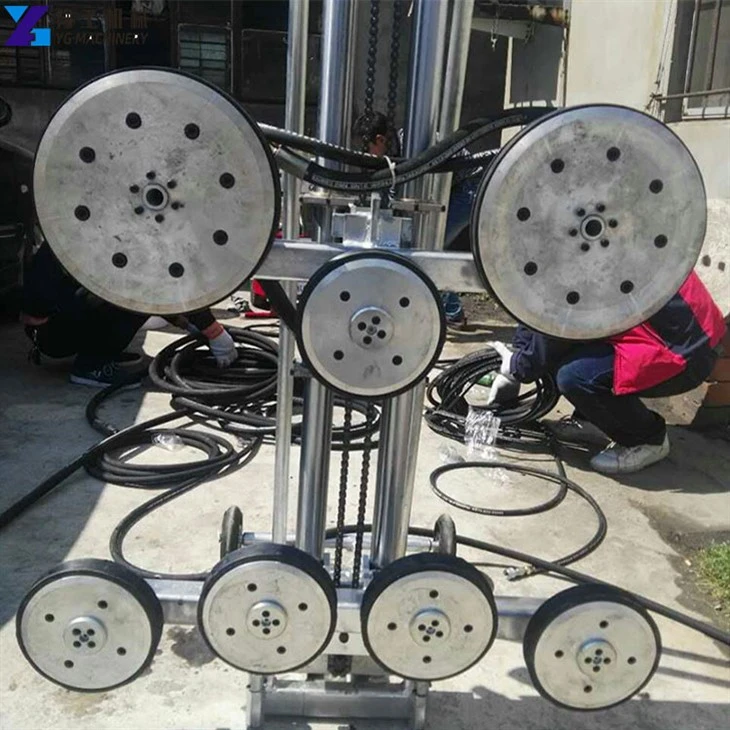

Also, consider the cutting depth you need. If you only need to make shallow cuts, a shorter wire will be sufficient. But for deeper cuts, you'll need a longer wire and a saw with a larger frame.
Conclusion
In conclusion, the size of a hydraulic wire saw is a crucial factor that can greatly impact the success of your cutting project. Whether you're looking for a compact saw for a small job or a heavy - duty saw for a large - scale project, there's a hydraulic wire saw out there that's the right size for you.
If you're still not sure which size of hydraulic wire saw is best for your needs, don't hesitate to reach out. We're here to help you make the right choice. Contact us to discuss your project requirements and let's find the perfect hydraulic wire saw for you. We've got a wide range of sizes and types to choose from, and our team of experts can guide you through the selection process.
References
- Industry standards and guidelines for hydraulic wire saws
- Manufacturer specifications for different types of hydraulic wire saws
- Case studies of successful hydraulic wire saw applications in various industries