

As a supplier of water mist cannons, I've witnessed firsthand the intricate relationship between water quality and the performance of these powerful dust suppression tools. In this blog, I'll delve into the impact of water quality on water mist cannons, exploring how different water characteristics can affect their functionality, efficiency, and longevity.
The Basics of Water Mist Cannons
Before we dive into the impact of water quality, let's briefly understand how water mist cannons work. Water mist cannons are designed to generate a fine mist of water droplets that can effectively capture and suppress dust particles in the air. These cannons are commonly used in construction sites, mining operations, and other industrial settings where dust control is crucial for environmental and health reasons.
The effectiveness of a water mist cannon depends on several factors, including the size of the water droplets, the coverage area, and the velocity of the mist. Water quality plays a significant role in determining these factors, as it can affect the atomization process and the overall performance of the cannon.
Impact of Water Quality on Atomization
One of the primary functions of a water mist cannon is to break down water into fine droplets through a process called atomization. The quality of the water can have a profound impact on this process.
Hard Water: Hard water contains high levels of minerals such as calcium and magnesium. When hard water is used in a water mist cannon, these minerals can accumulate on the nozzle and other internal components over time. This buildup can clog the nozzle, reducing the size and uniformity of the water droplets. As a result, the mist may not be as fine or evenly distributed, leading to reduced dust suppression efficiency. For example, in areas with hard water sources, operators may notice that the water mist cannon requires more frequent cleaning and maintenance to prevent nozzle blockages.
Soft Water: Soft water, on the other hand, has a lower mineral content. It is generally more suitable for use in water mist cannons as it is less likely to cause mineral buildup. Soft water can be atomized more easily, producing finer and more uniform water droplets. This results in better dust capture and suppression, as the smaller droplets have a larger surface area to interact with dust particles. However, extremely soft water may also have some drawbacks, such as reduced lubrication for the pump and other moving parts, which can lead to increased wear and tear.
Contaminated Water: Water contaminated with sediment, debris, or chemicals can also cause problems for water mist cannons. Sediment and debris can clog the nozzle and damage the internal components of the cannon. Chemical contaminants, such as heavy metals or acids, can corrode the metal parts of the cannon, reducing its lifespan and performance. For instance, if water from a polluted river or industrial wastewater is used in a water mist cannon, it can quickly cause damage to the equipment.
Impact on Equipment Longevity
The quality of the water used in a water mist cannon can significantly affect its longevity.
Corrosion: As mentioned earlier, water with high levels of contaminants or a low pH (acidic water) can cause corrosion of the metal components of the cannon. Corrosion weakens the structure of the equipment, making it more prone to leaks and mechanical failures. Over time, corrosion can lead to the complete breakdown of the water mist cannon, requiring costly repairs or replacement. For example, in coastal areas where the water may be brackish or contain salt, the risk of corrosion is particularly high.
Wear and Tear: Mineral buildup from hard water can also cause increased wear and tear on the internal components of the water mist cannon. The abrasive nature of the minerals can damage the pump, seals, and other moving parts, reducing their efficiency and lifespan. Regular maintenance, such as descaling and cleaning, is essential to prevent excessive wear and tear caused by hard water.
Impact on Dust Suppression Efficiency
The ultimate goal of a water mist cannon is to suppress dust effectively. Water quality can have a direct impact on this efficiency.
Particle Capture: The size and uniformity of the water droplets produced by the cannon are crucial for capturing dust particles. As we discussed earlier, water quality affects the atomization process, which in turn affects the droplet size. Finer water droplets have a greater surface area and can more effectively capture dust particles. If the water quality is poor and the droplets are too large or unevenly distributed, the dust suppression efficiency will be reduced.
Coverage Area: The quality of the water can also affect the coverage area of the water mist cannon. A well - functioning cannon with good water quality can produce a wide and even mist that covers a large area. However, if the nozzle is clogged or the atomization is poor due to water quality issues, the mist may not spread evenly, resulting in a smaller coverage area and less effective dust suppression.
Solutions to Improve Water Quality for Water Mist Cannons
To ensure optimal performance and longevity of water mist cannons, it is important to address water quality issues.
Water Treatment: Installing a water treatment system can help remove contaminants and adjust the mineral content of the water. For hard water, a water softener can be used to reduce the calcium and magnesium levels. Filtration systems can also be used to remove sediment and debris from the water. For water with chemical contaminants, more advanced treatment methods such as reverse osmosis or chemical neutralization may be required.
Regular Maintenance: Regular maintenance of the water mist cannon is essential, regardless of the water quality. This includes cleaning the nozzle, checking for mineral buildup, and inspecting the internal components for signs of wear and corrosion. By performing regular maintenance, operators can identify and address water quality - related issues before they cause significant damage to the equipment.
Conclusion
In conclusion, water quality has a significant impact on the performance, efficiency, and longevity of water mist cannons. As a [Supplier of water mist cannons], I understand the importance of using high - quality water to ensure the optimal operation of these dust suppression tools. By addressing water quality issues through proper treatment and maintenance, operators can improve the effectiveness of their water mist cannons and reduce the risk of equipment failure.
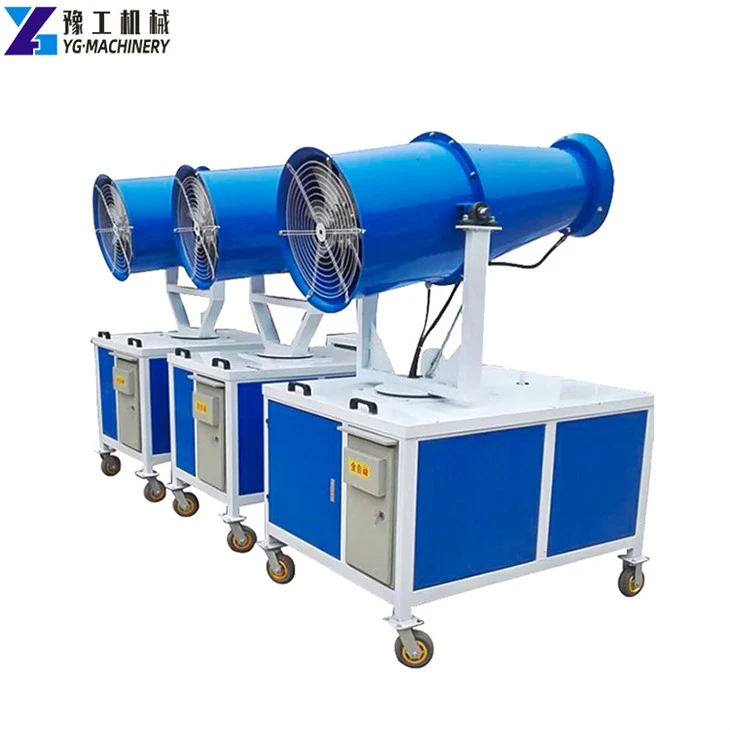

If you are in the market for a reliable [Water Mist Cannon], look no further. Our company offers a wide range of [Dust Suppression Equipment], including [Dust Suppression Fog Cannon], designed to meet your specific dust control needs. For more information and to discuss your requirements, please contact us for a procurement negotiation.
References
- Environmental Protection Agency. (2023). Guidelines for Water Quality in Industrial Applications.
- Smith, J. (2022). The Impact of Water Chemistry on Industrial Equipment. Journal of Industrial Water Management.
- Johnson, R. (2021). Dust Suppression Technologies: A Review. International Journal of Environmental Science and Technology.