

In the dynamic world of construction and industrial operations, lift platforms play a pivotal role in enhancing efficiency and safety. As a leading lift platform supplier, I often encounter clients who are confused about the differences between low - level lift platforms and high - level lift platforms. Understanding these differences is crucial for making the right purchasing decision that aligns with specific operational needs.
Design and Structure
Low - level lift platforms are typically characterized by their compact and simple design. They are built to reach relatively short heights, usually up to 6 meters. These platforms often have a smaller footprint, which makes them highly maneuverable in confined spaces. For example, in a small warehouse where there are narrow aisles, a low - level lift platform can easily navigate through the space to pick up and move goods.
On the other hand, high - level lift platforms are designed for more extensive vertical reach, often exceeding 6 meters and can go as high as several dozen meters. Their structure is more robust and complex to support the additional height and weight. They usually have a larger base to ensure stability at great heights. For instance, when constructing a high - rise building, high - level lift platforms are essential for workers to access different floors and perform tasks such as window installation or exterior wall painting.
Functionality and Application
Low - level lift platforms are commonly used in indoor settings such as warehouses, supermarkets, and small workshops. Their primary function is to lift and transport goods over short distances and to low heights. They are also suitable for tasks like maintenance work on low - lying equipment and shelves. For example, a supermarket may use a low - level lift platform to restock high shelves in the aisles.
High - level lift platforms, however, are mainly employed in outdoor construction projects, large - scale industrial facilities, and shipyards. They are used for tasks that require access to elevated areas, such as building construction, bridge maintenance, and tree trimming at great heights. In the construction of a large bridge, high - level lift platforms enable workers to reach different parts of the bridge structure for welding, riveting, and inspection.
Mobility and Portability
Low - level lift platforms are generally more mobile and portable. Many of them are battery - powered and can be easily moved around by a single operator. Some models even come with built - in wheels, allowing for quick and effortless repositioning. For example, a small electric forklift, which can be considered a type of low - level lift platform, is highly mobile and can be used to move pallets within a warehouse. Small Electric Forklift
High - level lift platforms, while some are mobile, often require more time and effort to move. Larger models may need to be transported on trucks and assembled on - site. Their mobility is also limited by their size and the need for a stable ground surface. However, there are also some high - level lift platforms that are designed for better mobility, such as small spider cranes. These cranes can be easily transported and set up in different locations. Small Spider Crane
Safety Features
Both low - level and high - level lift platforms are equipped with safety features, but the requirements and types of features may differ. Low - level lift platforms usually have basic safety features such as anti - slip platforms, safety rails, and emergency stop buttons. These features are sufficient to protect operators during normal use in relatively low - risk environments.
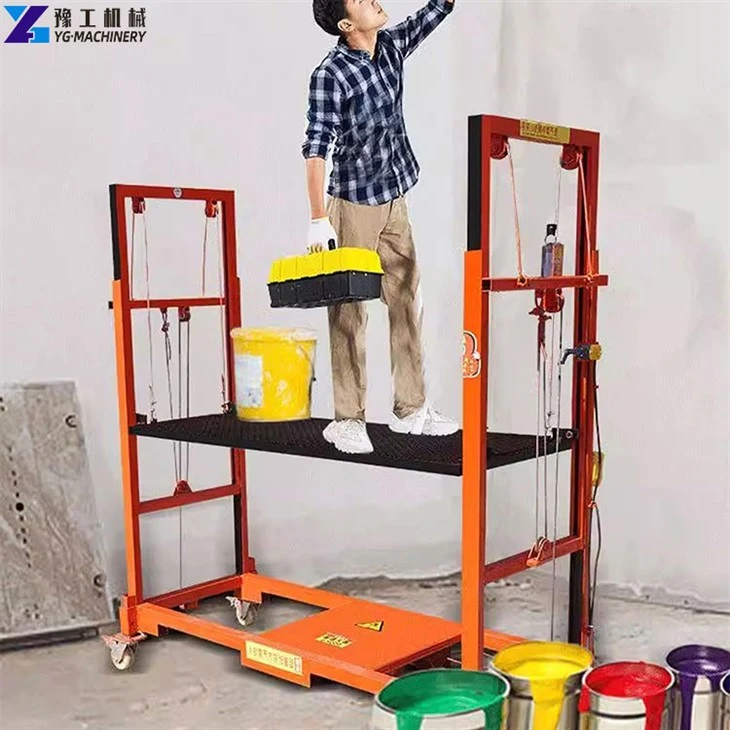
High - level lift platforms, due to the increased height and potential risks, have more advanced safety features. They may include automatic leveling systems to ensure stability on uneven ground, fall arrest systems to prevent operators from falling, and wind sensors to detect strong winds and stop the platform's operation if necessary. For example, an electric scaffolding platform, which is a type of high - level lift platform, is equipped with multiple safety mechanisms to protect workers at great heights. Electric Scaffolding Platform

Cost Considerations
In general, low - level lift platforms are more affordable than high - level lift platforms. Their simpler design, smaller size, and lower manufacturing costs contribute to the lower price. They also have lower operating costs, as they consume less energy and require less maintenance. For small businesses or those with limited budgets, low - level lift platforms are a cost - effective solution.
High - level lift platforms, on the other hand, are more expensive due to their complex design, advanced technology, and larger size. The cost of transportation, installation, and maintenance is also higher. However, for large - scale construction projects or industrial operations where high - level access is essential, the investment in high - level lift platforms is often justified by the increased productivity and safety they provide.
Maintenance and Durability
Low - level lift platforms are relatively easy to maintain. Their simple mechanical and electrical systems make it easier for operators to perform routine maintenance tasks such as battery charging, lubrication, and inspection. They also have a longer lifespan in normal use, as they are not subjected to the same extreme conditions as high - level lift platforms.
High - level lift platforms require more frequent and comprehensive maintenance. Their complex systems need to be regularly checked and serviced to ensure safe operation. The components of high - level lift platforms are also more likely to wear out due to the higher stress and exposure to the elements. However, with proper maintenance, high - level lift platforms can also have a long and reliable service life.
Conclusion
In conclusion, the differences between low - level and high - level lift platforms are significant in terms of design, functionality, mobility, safety, cost, and maintenance. As a lift platform supplier, I understand that choosing the right lift platform is crucial for the success of your project. Whether you need a low - level lift platform for indoor tasks or a high - level lift platform for large - scale construction, I can provide you with the best solutions tailored to your specific needs.
If you are interested in learning more about our lift platforms or would like to discuss your purchasing requirements, please feel free to contact us. Our team of experts is ready to assist you in making the right decision and ensuring a smooth and efficient procurement process.
References
- Construction Equipment Handbook, various editions
- Safety Standards for Lift Platforms, industry - recognized guidelines
- Manufacturer's manuals for lift platforms