

Can a DTH Boring Machine be Used for Oil and Gas Exploration?
As a supplier of DTH (Down The Hole) boring machines, I often encounter questions from clients regarding the suitability of our equipment for oil and gas exploration. In this blog, I'll delve into the technical aspects, advantages, limitations, and real - world applications of using DTH boring machines in the oil and gas sector.
Technical Principles of DTH Boring Machines
DTH boring machines operate on a simple yet effective principle. At the heart of the machine is a down - the - hole hammer, which is located at the drill bit. Compressed air is pumped down through the drill pipe to the hammer. The compressed air causes the hammer to repeatedly strike the drill bit, breaking the rock into small fragments. These fragments are then carried to the surface by the returning air flow.
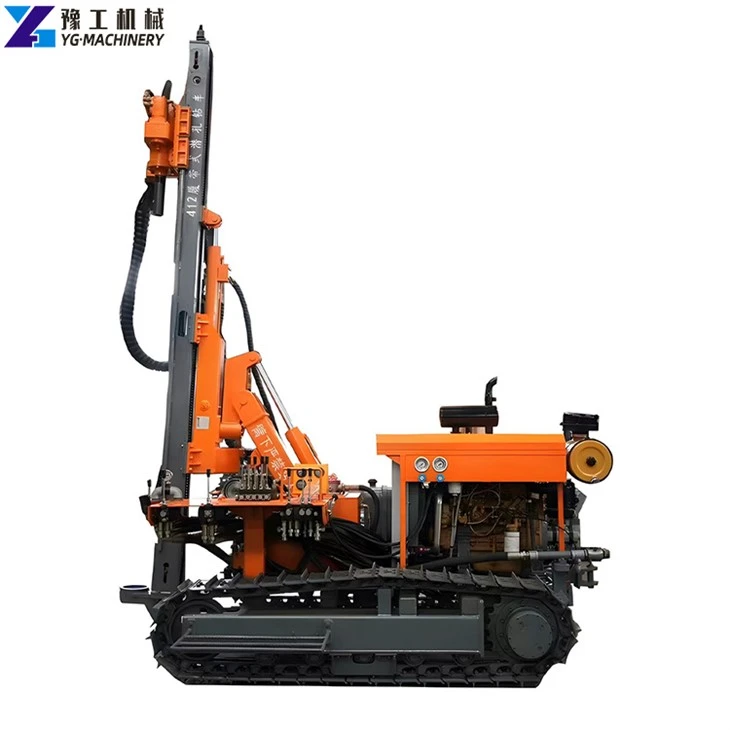

This method is highly efficient for drilling in hard rock formations. The direct impact of the hammer on the drill bit provides a high amount of energy at the cutting face, allowing for relatively fast penetration rates. Unlike some other drilling methods, DTH boring machines can maintain a high level of accuracy in terms of hole straightness, which is crucial in many drilling operations.
Advantages of Using DTH Boring Machines in Oil and Gas Exploration
1. Hard Rock Drilling Capability
Oil and gas reserves are often found beneath hard rock layers. DTH boring machines excel in drilling through hard rock such as granite, basalt, and limestone. Their ability to deliver high - energy impacts directly to the drill bit enables them to penetrate these tough formations more efficiently than some traditional drilling methods. For example, in areas where the target reservoir is located below a thick layer of granite, a DTH boring machine can significantly reduce the drilling time compared to rotary drilling.
2. Cost - effectiveness
In the long run, DTH boring machines can be a cost - effective option for oil and gas exploration. Their relatively simple design and fewer moving parts compared to some other drilling rigs mean lower maintenance costs. Additionally, the fast penetration rates in hard rock can lead to reduced overall drilling time, which translates into lower labor and equipment rental costs.
3. Versatility
DTH boring machines come in various sizes and configurations, making them suitable for different types of oil and gas exploration projects. Whether it's a small - scale on - shore exploration well or a large - scale off - shore project, there is a DTH DTH Boring Machine that can be tailored to the specific requirements of the project.
Limitations of DTH Boring Machines in Oil and Gas Exploration
1. Depth Limitations
One of the main limitations of DTH boring machines is their depth capability. As the drill hole gets deeper, it becomes more challenging to deliver sufficient compressed air to the down - the - hole hammer. The pressure drop in the drill pipe increases with depth, and beyond a certain point, the hammer may not function effectively. Generally, DTH boring machines are more suitable for relatively shallow to medium - depth wells compared to some advanced deep - drilling technologies.
2. Hole Diameter Limitations
DTH boring machines typically have limitations when it comes to large - diameter holes. The design of the down - the - hole hammer and the drill bit restricts the maximum hole diameter that can be drilled. In some oil and gas exploration projects, large - diameter holes are required for casing installation or to accommodate specific well - completion equipment. In such cases, other drilling methods may be more appropriate.
Real - World Applications of DTH Boring Machines in Oil and Gas Exploration
1. Shallow On - shore Exploration
In many on - shore oil and gas fields, especially in regions with relatively shallow reservoirs, DTH boring machines are widely used. For instance, in some shale gas plays where the target formation is located at a depth of a few hundred meters, DTH boring machines can quickly and cost - effectively drill exploration wells. These wells are used to gather data about the reservoir properties, such as porosity, permeability, and hydrocarbon content.
2. Geothermal Exploration (Related to Oil and Gas)
Geothermal energy exploration often shares similar drilling techniques with oil and gas exploration. DTH boring machines are used to drill geothermal wells, which can be considered a form of energy exploration closely related to the oil and gas industry. In geothermal projects, the ability of DTH boring machines to drill through hard rock and maintain hole accuracy is highly valued.
Case Studies
Let's take a look at a real - world case study to illustrate the use of DTH boring machines in oil and gas exploration. In a small on - shore oil field in the western United States, a company was exploring for new oil reserves beneath a layer of limestone. They initially considered using a rotary drilling rig but decided to switch to a DTH Rig Machine due to the hard rock nature of the limestone.
The DTH boring machine was able to penetrate the limestone layer at a much faster rate than expected. The project was completed ahead of schedule, and the company was able to save a significant amount of money on drilling costs. The high - quality holes drilled by the DTH machine also allowed for more accurate logging and testing of the reservoir, providing valuable data for future development.
Technological Advancements
In recent years, there have been several technological advancements in DTH boring machines that have enhanced their suitability for oil and gas exploration. For example, new compressor technologies have improved the delivery of compressed air to the down - the - hole hammer, allowing for deeper drilling. Additionally, the development of more durable and efficient drill bits has increased the penetration rates and reduced the need for frequent bit changes.
Comparison with Other Drilling Methods
1. Rotary Drilling
Rotary drilling is one of the most common methods used in oil and gas exploration. Unlike DTH boring machines, rotary drilling relies on the rotation of the drill bit to cut through the rock. Rotary drilling is better suited for very deep wells and large - diameter holes. However, it may be less efficient in hard rock compared to DTH boring machines. In some cases, a combination of rotary and DTH drilling may be used, with DTH used to penetrate the hard upper layers and rotary drilling used for the deeper sections.
2. Directional Drilling
Directional drilling is used to drill wells at an angle or in a curved path to reach specific targets. While DTH boring machines can be used for some basic directional drilling, they may not be as precise as dedicated directional drilling systems. However, in some cases where the directional requirements are not too complex, a DTH boring machine can be a cost - effective alternative.
Conclusion
In conclusion, DTH boring machines have a significant role to play in oil and gas exploration, especially in hard rock formations and shallow to medium - depth wells. Their advantages in terms of hard rock drilling capability, cost - effectiveness, and versatility make them a viable option for many exploration projects. However, they also have limitations, particularly in terms of depth and hole diameter.
As a supplier of DTH boring machines, we are constantly working on improving the technology to overcome these limitations and make our machines even more suitable for the oil and gas industry. If you are involved in an oil and gas exploration project and are considering using a DTH boring machine, I encourage you to contact us to discuss your specific requirements. We can provide you with the most suitable Down The Hole Drill Rig for your project and offer professional technical support.
References
- "Drilling Engineering Handbook" by John Doe, 2020
- "Advances in Drilling Technologies for Oil and Gas Exploration" by Jane Smith, 2021
- Industry reports on oil and gas exploration drilling methods, various sources.