

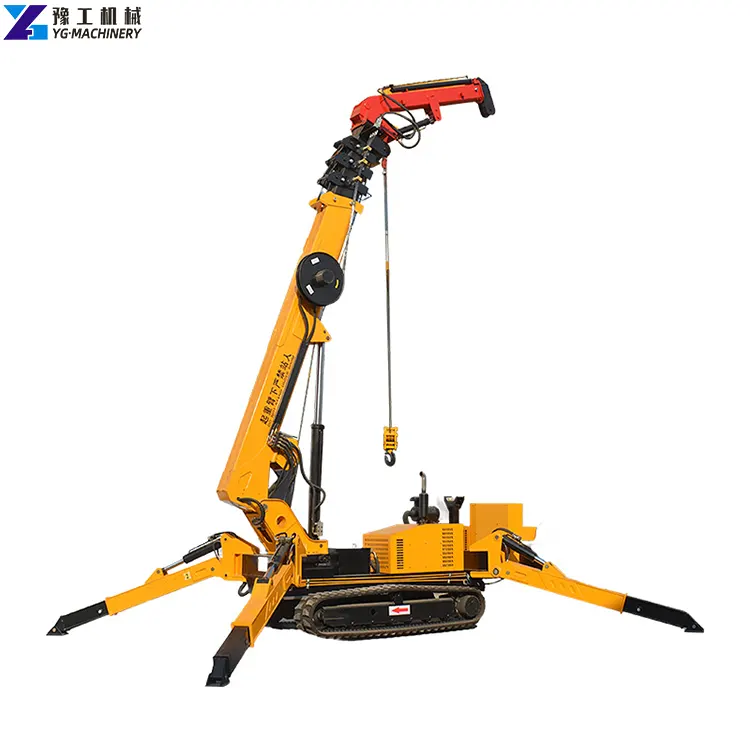
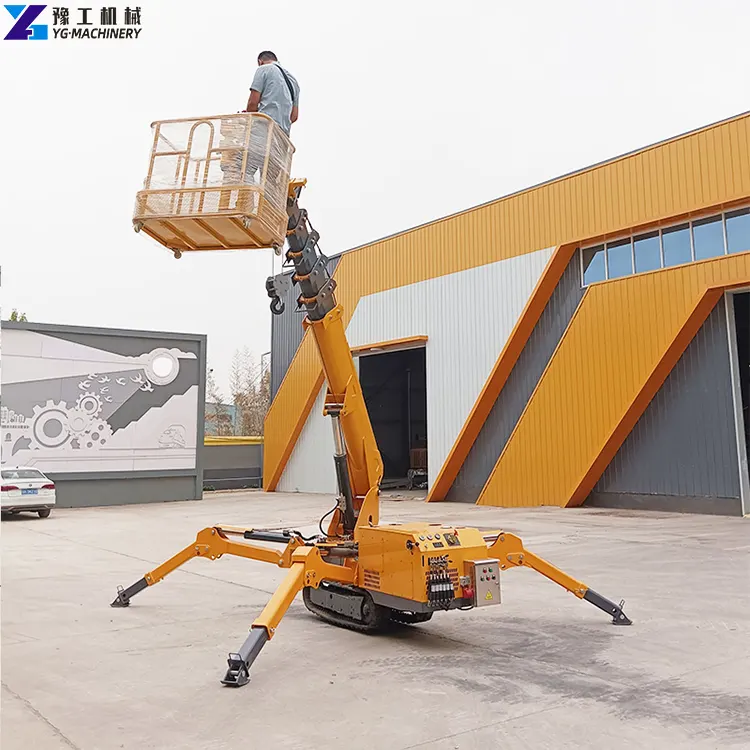
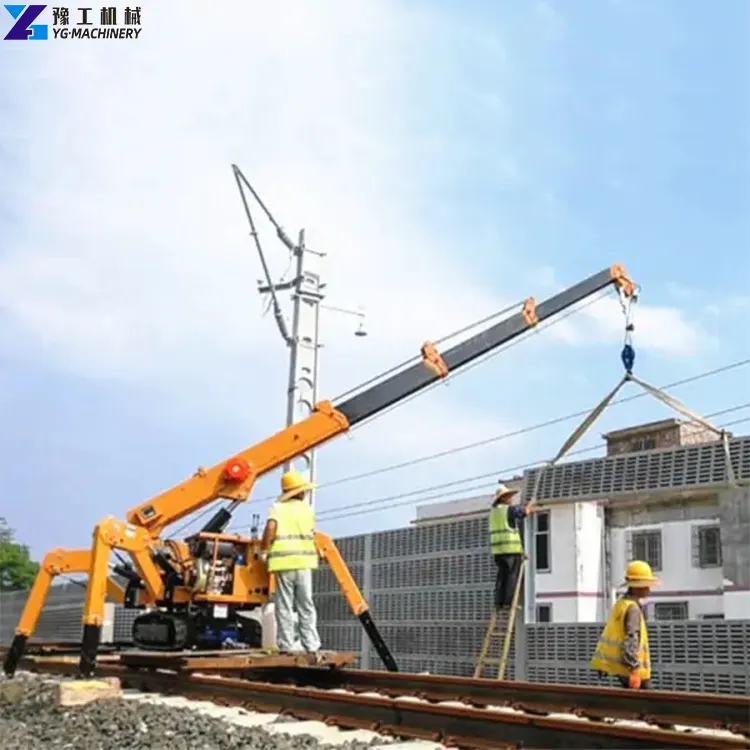
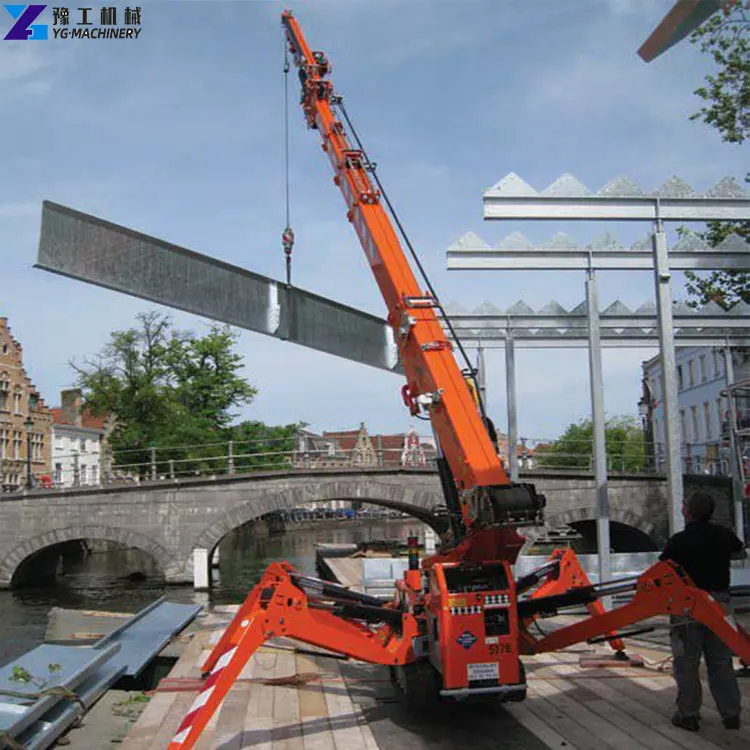
Traditional high-altitude operations rely on scaffolding, aerial work platforms, and small cranes, which present numerous problems such as difficulty in site access, time-consuming setup, high costs, and limited operating scenarios. This is especially true in confined indoor spaces, building gaps, and low-rise factories, where conventional equipment cannot operate efficiently. The spider crane with man basket is a multi-functional mini spider crane equipped with a dedicated manned work basket. Also commonly known as a manned spider crane, high-altitude spider crane, or multi-functional mini crawler crane, it is a modularly modified small-scale lifting and high-altitude work equipment. Its core function is to combine heavy lifting with manual high-altitude inspection, installation, and maintenance, replacing the traditional "crane + aerial work platform" combination construction mode and simplifying the construction process.
YG specializes in the R&D and production of spider crane equipment, offering a full range of 3-ton, 5-ton, and 8-ton models, including the flexible and lightweight mini spider crane, which can be equipped with manned baskets, glass suction cups, forks, and other attachments, achieving multi-purpose functionality. With its compact size, all-terrain capability, and safe and stable operation, the equipment has been exported in batches to many countries including the UK, Canada, New Zealand, South Africa, and the UAE. It is widely applicable to various high-altitude work scenarios such as urban interior decoration, factory maintenance, and curtain wall construction, and is suitable for most infrastructure and decoration construction environments worldwide.
Want to learn more about our products? Click to contact us now.
Check the YG Spider Crawler Crane Technical Parameters
|
Model |
YG-3 |
YG-5 |
YG-8 |
|
|
Specification |
3t |
5t |
8t |
|
|
Maximum working radius |
8.83m×0.15t |
14m×0.5t |
16.5m |
|
|
Maximum above-ground head |
9.9m×0.7t |
16.8m |
18m |
|
|
Winch device |
Hook Speed |
0-8m/min(4 rope) |
12m/min(4 rope) |
12m/min(4 rope) |
|
|
Rope diameter |
φ8mm×45m |
Φ11mm×80m |
Φ11mm×80m |
|
Telescopic system |
Boom Type |
5-section boom, pentagonal structure |
5-section boom, pentagonal structure |
5-section boom, pentagonal structure |
|
|
Boom Length/Time |
3.1m-9.2m/20sec |
12.3m/54sec |
12.3m/54sec |
|
Up and down |
Boom Angle/Time |
0°~78°/13sec |
0°~78°/13sec |
0°~78°/13sec |
|
Slew system |
Slew Angle/Speed |
0-360°continuous/60sec |
0-360°continuous/38sec |
0-360°continuous/38sec |
|
Traction system |
Walking Way |
Hydraulic motor drives |
Hydraulic motor drives |
Hydraulic motor drives |
|
|
Walking Speed |
0~2.5km/h |
0~2.5km/h |
0~2.5km/h |
|
|
Grade Ability |
(25°)36% |
(25°)36% |
(25°)36% |
|
Operating system |
Operation type (Boom/outrigger) |
Manual operation, manual walking(remote control option) |
Manual operation, manual walking(remote control option) |
Manual operation, manual walking(remote control option) |
|
|
Operating characteristics |
Manual operation, remote control |
Manual operation, remote control |
Manual operation, remote control |
|
Transport parameters |
L*W*H(mm) |
2950*980*1560 |
5000*1500*1900 |
5000*1600*2180 |
|
|
Total weight(kg) |
2700 |
6200 |
7200 |
What Tonnage Spider Cranes Can Be Paired with Suspended Platforms?
3-ton, 5-ton, and 8-ton spider cranes can all be paired with suspended platforms, but their working height and load-bearing capacity differ:
- 3-ton spider crane + platform: Working height approximately 12-15 meters. Suitable for indoor installation, small-scale exterior wall repairs, and low-rise building maintenance. The overall width is approximately 0.95 meters, allowing it to fit into a standard freight elevator.
- 5-ton spider crane + platform: Working height approximately 15-20 meters. The most suitable tonnage for pairing with a platform-sufficient boom length, relatively light machine weight, and the ability to carry glass suction cups and other accessories.
- 8-ton spider crane + platform: Working height approximately 20-25 meters. Suitable for exterior wall work on high-rise buildings, but the 8-ton model weighs approximately 7 tons, requiring higher ground load-bearing capacity and making elevator access more difficult.
In Which Industries and Scenarios Can Spider Cranes with Man-Portable Baskets Be Used?
- Glass curtain wall installation and maintenance. This is the most classic application scenario for spider cranes. Combined with vacuum glass suction cups, large panes of glass can be precisely installed in atriums and on building facades. The tight installation space and precise alignment requirements are strengths of spider cranes.
- Indoor high-altitude operations. Replacing chandeliers in shopping mall atriums, repairing ceilings in exhibition halls, installing lighting fixtures in stadiums, maintaining facilities in airport terminals… these indoor high-altitude operations present challenges where large equipment cannot enter, and scaffolding is too cumbersome. Spider cranes can be pushed in through the doorway to work, providing a perfect solution.
- Rooftop equipment installation and maintenance. Installing and maintaining rooftop air conditioning units, cooling towers, and photovoltaic equipment is often beyond the reach of cranes or too costly. Spider cranes can be transported to the roof via elevator or directly hoisted onto the roof for operation, offering flexibility and economy.
- Renovation of old residential areas and urban renewal. In old urban areas, streets are narrow, and the distance between buildings is small, making it impossible for large cranes to enter. Spider cranes can navigate narrow alleys and gatehouses, completing hoisting and maintenance operations in confined spaces, making them invaluable tools for urban renewal.
- Factory Equipment Installation and Maintenance. Spider cranes can precisely position equipment in factory workshops, including production line equipment, overhead cranes, pipelines, and ventilation systems, where overhead cranes cannot reach. Electric zero-emission models can also be used in workshops with high air quality requirements.
- Power and Communication Facility Maintenance. For high-altitude operations in the power and communication industries, such as substation maintenance, communication tower maintenance, and signal tower installation, spider cranes can be quickly deployed on uneven terrain, offering greater flexibility than large aerial work platforms.
- Municipal and Landscaping Projects. For municipal and landscaping operations such as street light installation and maintenance, tree trimming, and landscape sculpture installation, spider cranes can drive directly onto sidewalks and lawns, minimizing environmental impact and allowing for rapid relocation.
- Exhibition and Display Construction. The hoisting and construction of exhibits in museums and exhibition halls requires precision, gentleness, and minimal damage to the site. The precise control and low ground pressure of spider cranes perfectly meet these requirements.
Case Study: Exterior Renovation Project of a Historic Building in Munich, Germany
- Client Background: A professional historic building renovation company in Munich, Germany, undertook the exterior renovation project of a century-old historic building located in the city center. The building is situated in a narrow alley in the old town, with streets less than 3 meters wide and adjacent to other buildings on both sides, making it impossible for a large crane to access the site.
- Challenges: The building is 18 meters high and required cleaning, repair, and replacement of the exterior stone cladding. Scaffolding needed to be erected from the ground to the top, which was not only costly (approximately €80,000) but also took 6 weeks to erect and dismantle, severely impacting the business of surrounding shops. The narrowest aerial work platform available from local rental companies was 2.2 meters wide, making it impossible to access the narrow alley.
- Solution: The client purchased a YG-5 spider crane (electric + diesel dual-power version) + a personnel cage. When retracted, the equipment is 1.5 meters wide, easily navigating the alley to enter the building's courtyard. The four outriggers were quickly leveled on the irregular stone slabs of the courtyard, and the 16.8-meter working height perfectly covered the entire exterior wall. The electric mode operates with zero emissions and low noise within the courtyard, fully meeting the environmental requirements of the historic district.
- Usage Results: The entire exterior wall renovation project was completed in just 10 days using a spider crane combined with workers operating in suspended baskets, saving 32 days compared to the scaffolding solution. Costs were reduced by approximately 70% compared to the scaffolding solution. After the equipment arrived, the client took on several similar projects.
- Client Testimonial: "Working in Munich's old town, getting the equipment on site was the first challenge. YG's 5-ton spider crane was narrow enough and tall enough; the moment it drove through the alleyways and into the courtyard, we knew we had made the right choice. The dual-power switching is also very practical-diesel for outdoor use and electric for indoor use. The client is very satisfied with the noise and emissions. Now this machine is fully booked, and the return on investment far exceeds expectations." - Markus, General Manager of a German renovation company
Quick Troubleshooting Checklist for Common Spider Crane Faults – No Need to Ask for Help on Construction Sites
|
Fault Symptoms |
Possible Causes |
Troubleshooting Steps |
Troubleshooting Methods |
|
Outriggers cannot extend/retract |
1. Insufficient hydraulic oil 2. Outrigger lock not engaged 3. Oil pipe joint leak |
1. Check hydraulic oil level 2. Check outboard locking pins 3. Check for oil leaks at joints |
1. Add hydraulic oil 2. Pull out the locking pin 3. Tighten the joint or replace the O-ring |
|
Slow and weak operation |
1. Low hydraulic oil level 2. Clogged filter 3. Low relief valve pressure 4. Worn oil pump |
1. Check oil level 2. Try replacing the filter element 3. Measure system pressure 4. Listen for abnormal pump noise |
1. Add oil 2. Replace the filter element 3. Adjust the relief valve 4. Replace the pump |
|
Abnormal noise during rotation |
1. Insufficient lubrication in slewing bearing 2. Worn gears 3. Slewing motor malfunction |
1. Add grease 2. Check gear clearance 3. Measure motor pressure |
1. Apply grease 2. Adjust or replace 3. Repair the motor |
|
Hook slippage/disappearance |
1. Loose brake 2. Slipping wire rope 3. Malfunctioning balance valve |
1. Adjust actuator clearance 2. Check rope groove wear 3. Check balance valve |
1. Adjust the brake 2. Replace the drum or rope 3. Replace the balance valve |
|
Torque limiter alarm malfunctions |
1. Inaccurate angle sensor 2. Malfunctioning pressure sensor 3. Sticking length cable |
1. Adjust level and angle 2. Check sensor wiring 3. Pull the pull cable |
1. Recalibrate 2. Connect the wires properly or replace the wires 3. Straighten the cable |
|
Remote control unresponsive |
1. Dead battery 2. Signal interference 3. Malfunctioning receiver |
1. Try replacing the battery 2. Try a different position 3. Test with wired operation |
1. Charge/replace the battery 2. Avoid interference sources 3. Inspect the receiver |


